What a jacketed gate valve solves
Some products only flow while they are hot. Bitumen, sulphur, resins, wax, molasses, fatty acids, polymers and many chemicals start to thicken or solidify as soon as they cool. An ordinary valve body becomes a cold spot, and the media freezes inside it.
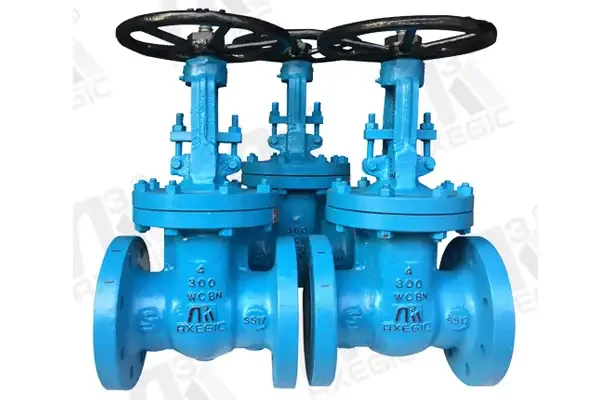
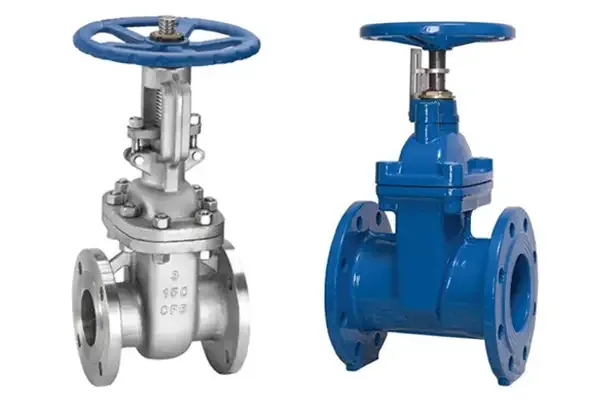
A jacketed gate valve surrounds the body with an outer shell. Steam, hot water or thermic oil circulates through the jacket and keeps the valve at the same temperature as the traced pipeline. Axegic supplies jacketed gate valves based on its outside screw and yoke (OS&Y) design with a flexible wedge and seal-welded or integral seat rings.
Key features
- Full-bore gate design – no pockets for product to build up when open.
- Rising stem keeps threads outside the hot process fluid.
- Jacket connections for steam, hot water or thermic oil heating.
- Cast steel, stainless steel and alloy body options to suit temperature and corrosion.
- Smooth flow path and robust packing gland for long service life.
Specification
| Size range | DN15 to DN600 (NPS ½″ to 24″) |
|---|---|
| Pressure class | ASME Class 150, 300, 600, 900, 1500 & 2500 |
| Design | OS&Y, bolted bonnet, flexible wedge; seat rings seal-welded or integral |
| Heating jacket | For steam, hot water or thermic oil |
| Face-to-face | ASME B16.10 |
| Flange drilling | ASME B16.5 |
| Testing | API 598 |
| Body materials |
|
Typical applications
Jacketed gate valves are used in chemical and petrochemical plants, dyes and intermediates, paints and varnishes, soaps and detergents, food and edible oil processing, solvent extraction, sugar, breweries and distilleries. Where a heated line also needs flow control, ask about jacketed globe valves; for slurry service see knife gate valves.