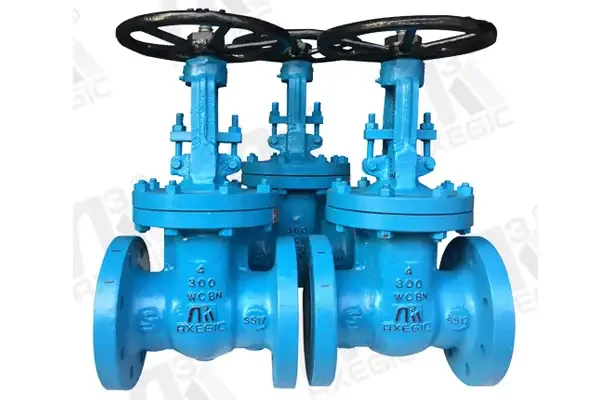
How a swing check valve works
The disc hangs from a hinge pin inside the body. Forward flow pushes the disc up and out of the flow path; when flow stops, gravity and back-pressure swing it back onto the seat. With the disc lifted clear, the flow path is almost unobstructed – which is why swing check valves are generally installed in lines with gate valves, where low pressure drop matters.
Features
- Low pressure drop across the valve when fully open.
- Renewable seat and disc for long service life.
- Bolted cover for internal access without removing the valve from the line.
- Easy to install – flanged, screwed, socket weld or butt weld ends.
- Cast carbon, alloy, stainless and duplex steel bodies.
Specification
| Size range | DN15 to DN600 (NPS ½″ to 24″) |
|---|---|
| Pressure class | ASME Class 150, 300, 600, 900, 1500 & 2500 |
| Design standards | BS 1868, API 594, API 6D, DIN 3230 |
| Face-to-face | ASME B16.10 |
| Flange drilling | ASME B16.5 |
| Testing | API 598 |
| End connections | Flanged, screwed, socket weld, butt weld, Victaulic |
| Operation | Self-acting (flow operated) |
| Body materials |
|
Installation tips
- Install in horizontal lines, or vertical lines with upward flow only.
- Allow a straight run of pipe upstream so turbulence does not make the disc flutter.
- For pulsating flow or fast reversals, consider a dual plate or spring-loaded non-slam design from our non-return valve range.
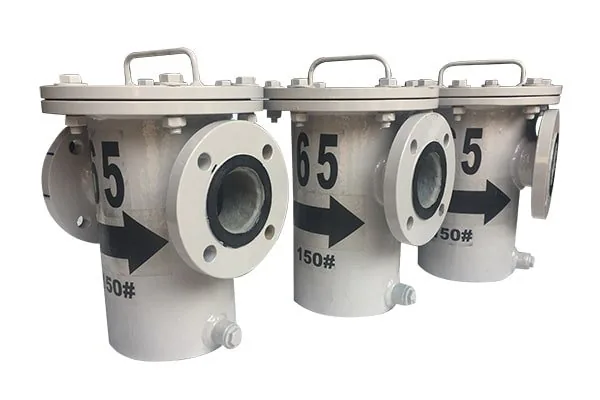
- Fit a strainer upstream where the media carries debris.
Where swing check valves are used
Pump discharge lines, water works and water treatment, cooling water, refinery and petrochemical process lines, steam condensate, fire water, and marine systems.